Evaluate and Prioritize your Landscape Projects

Part 2

During the month of August, we will provide you a 5 part series on how to easily create your 2018 budget, with the help of your commercial landscape company. Below are the links to the other blog posts in this series:

Where to Start

Now that you have considered the SWOT (Strengths, Weaknesses, Opportunities and Threats) of your property, this is a great time to decide where your projects fit into your budget. In addition, phasing and scheduling out when each project will occur will help ease and relax your budgeting season.  Most importantly, you have a plan for all of your property’s landscape needs.

Determining Your Costs

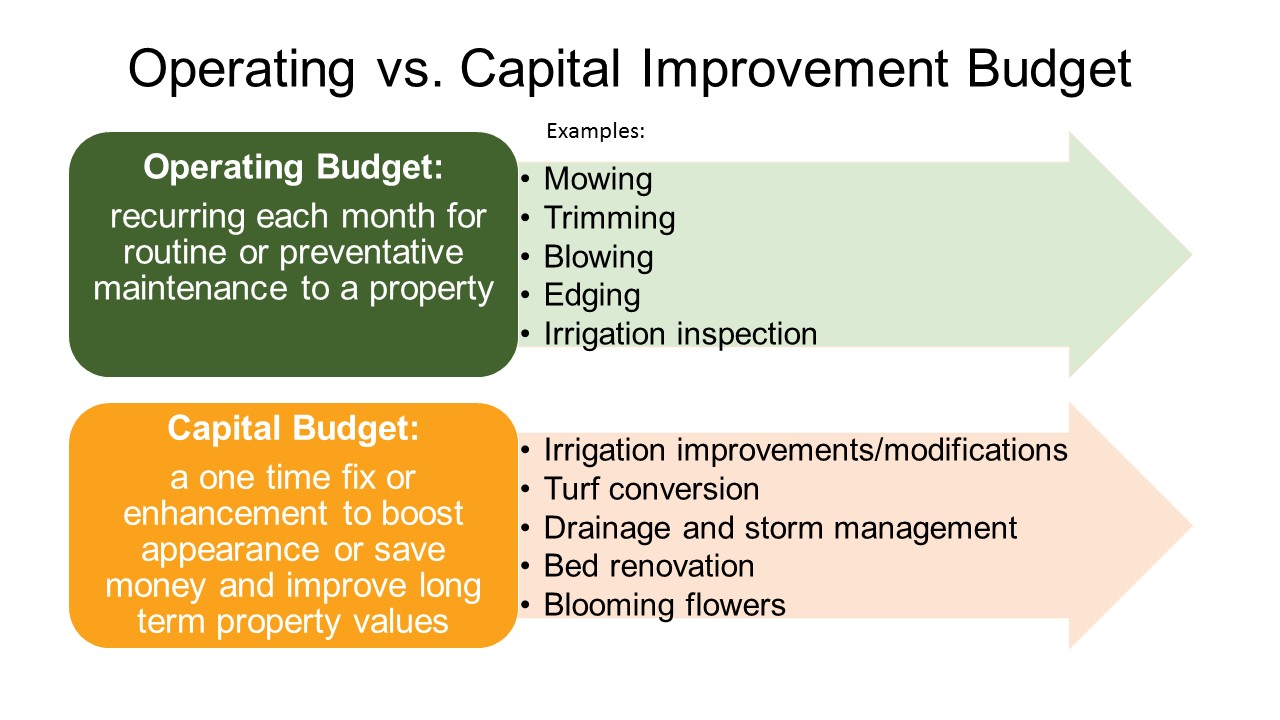
As a property manager or owner, you almost certainly are assessing costs, but how do you identify projects, prioritize and offer continual improvements to the surrounding landscape?  To simplify, let’s break it down into two distinct budgets.
Chart

Why is this important?  Because some property managers and owners may think adding one installation or simply performing monthly maintenance is enough.  In reality, it is a combination of regular maintenance and planned upgrades that keep your property in pristine condition.  It’s not in the best interest for your property to just submit the same budget as last year.  In the end, carefully reviewing the operating and capital budget with your landscape service company will minimize urgent repairs, protect precious resources and be cost effective.

3-Year Plan

Think long term. We recognize budgets are limited and most properties have multiple goals for improvements.  It can be over-whelming and sometimes seem impossible to get all of the projects complete in one year.  Here is where you can get the advice from your commercial landscape maintenance provider on phasing and scheduling out projects:
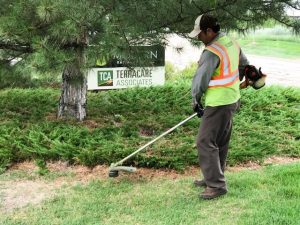
 

  • TrimmingThis year – what are some quick fixes you have money to support this year? Is it mulch to spruce up an entrance, fall flowers to plant in planters or additional lawn care for healthy turf.  Consider starting some improvement projects now.
  • The first year is geared toward general maintenance improvements. Improvements may include additional lawn care treatments, plant health care needs, comprehensive pruning and trimming beyond monthly maintenance requirements. This year may be a good time to begin large multi-year projects with phases.
  • The second year is focused on enhancements and major repairs or upgrades.  This may include, irrigation repairs, plant and tree replacement, and drainage upgrades.
  • The third year is focused on multi- year project completions and may include, water conservation strategies or drought tolerant plantings.

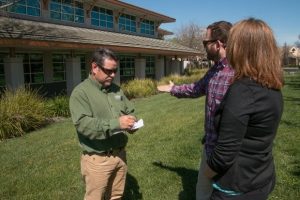
Whether you are clear about the commercial property landscape goals or you need help to define a plan, take a moment, and schedule a consultation with your Account Manager at Terracare.  It’s worth the time!
 

Need more budget help?.

Four Smart Tips to Start a Commercial Landscape Budget – It’s SWOT

Part 1

Studies show a beautiful commercial landscape can raise your property value and attractiveness by as much as 20%.  Simply, through careful planning, a well-maintained property can transform into a place people will enjoy year round. This all starts with a budget.

During the month of August, we will provide you a 5 part series on how to easily create your 2018 budget, with the help of your commercial landscape company. Below are the links to the other blog posts in this series:
Commercial Landscape Budget

It’s SWOT

Start with a walk through with your landscape provider. This opens the discussion on four key areas:

  • Strengths
  • Weaknesses
  • Opportunities
  • Threats or challenges


A SWOT analysis breaks down the property’s features into good or challenging areas and evaluates the property as a whole. Even better, it builds a dialog between you, the property manager, and your landscape account manager on expectations and priorities. Discuss with your Terracare representative the following as you walk the property.


Strengths

Weaknesses

• What do you like about the property?

• Are the property entrances a focal point and well kept?

• Are there shade trees throughout the property?

• Do you have enough color?

• Do you have irrigation issues?

• Are there quick fixes like mulch you can take care of today to improve quickly?

• Are there any menacing pests that will harm trees or plants?

• Does your turf need more luster?

Opportunities

Threats or challenges

• Think long term.


• What projects would you like to do, if costs were not part of the equations?

• Consider upgrading your irrigation system to be eco-friendly and conserve water usage significantly.

• Plant replacement or converting turf area to more sustainable plants.

• Ask your landscape provider how to help build a 3-year landscape plan and start in stages.

• What limitations do you have on the property?


• Will there be more growth?

• Will foot or car traffic increase in the future?

• Look at areas that are more vulnerable, and if left untreated this might have a costly outcome.

•Do you have defined outdoor areas for future visitors or workforce?


What’s next? –  start now, schedule your property walk through with a SWOT in your hand and simplify the decision with this assessment tool.  It’s a smart way to begin your budget process.  See part 2 next week on how to prioritize your landscape projects.


Schedule an Appointment.

Is Your Property’s Irrigation System Wasting Money?

It’s HOT!  Don’t send money down the drain! Your landscape provider can help you maintain and monitor your property’s automated irrigation system to ensure this is the most efficient way of watering your landscape. Having a properly maintained irrigation system is also one of the best ways to minimize water waste and lower overall watering costs.

Smart scheduling saves water

An irrigation controller can help monitor your system’s watering schedule to fit \ the watering needs of your property.  Here is what your landscape provider is looking to do:

  • Setting the timer for early in the morning or in the evening can minimize water evaporation by up to 30%.
  • irrigationA rain or soil moisture sensor controller to monitor and adjust your watering schedule regularly and based on seasonal weather conditions and other factors. Weather-based controllers automatically adjust the irrigation schedule as weather conditions change.
  • Consider the amount of sun, shade, and wind exposure on the plants and schedule individual zones to be most efficient. The type of soil will also affect how much water can be absorbed without runoff. The landscape provider will evaluate the setting to the irrigation system to run for three or four short intervals, allowing time between each for the water to soak more deeply into the soil.
  • Checking often on the sprinkler heads to ensure they are set properly to avoid watering driveways, sidewalks, or buildings.


Regular irrigation system maintenance saves water.

Like any other mechanical system, the irrigation system also needs regular maintenance to keep it working efficiently. Parts will break or wear out and must be replaced. An older system may not be able to handle the needs of a new landscape design or other changes to your property.

Retrofit the system with a rain or soil moisture sensor to prevent over watering. Rain sensors stop the system from operating when it rains; soil moisture sensors use long metal probes to measure moisture at the root zone and turn the system off when no additional water is needed, this is highly encouraged for water conservation practices.

At Terracare Associates, we recommend performing a regular irrigation system audit. Your irrigation systems should be regularly inspected for leaks, broken sprinkler heads, or other damaged components. During our regular inspections, we evaluate pressure and adjust it as needed so your sprinklers work optimally to distribute the water.

(see call to action below)

Free Irrigation Audit

  • This field is for validation purposes and should be left unchanged.

Terracare Associates named to Lawn and Landscapes’ Top 100 list


top 100

Littleton, Colorado –Terracare Associates has been named one of the largest landscape companies in North America by Lawn & Landscape magazine for the seventh time.

Terracare Associates ranked 22nd on the 2017 Lawn & Landscape Top 100 list, making Terracare the largest landscape provider headquartered in Colorado.

“Terracare Associates is honored to be represented in such a prestigious group on Lawn and Landscapes’ Top 100 lists,” says Terracare Associates’ president Dean Murphy. “We service more than 1,800 properties throughout the Western United States and are privileged to have a team of more than 1000 employees showcasing the dedication and customer care to achieve this impressive recognition.”

The Lawn & Landscape prestigious list of Top 100 is based on 2016 revenue from landscape profit centers, and is reported by each company listed. The companies on this list earned a combined revenue of $9,161,843,124 in 2016, which is an increase of $594,598,970 or 6.9 percent, over 2015. Companies on the list also reported total employment of 95,125. Based on the data, the average growth expected in 2017 is 9.9 percent.

For more information, see (link)

About Terracare Associates

Terracare Associates, LLC is a recognized leader in outdoor maintenance in the Western United States. For more than 30 years, our certified and experienced staff works during all seasons to improve landscapes, parks, roadways and infrastructure for beautiful, safe and sustainable outdoor environments. We are headquartered in Littleton, Colorado, and are proud to serve Colorado, Northern and Southern California and Texas.

About Lawn and Landscape

Lawn & Landscape is the leading b2b publication serving the $70-billion landscape and lawn care industry. With a suite of services – including a monthly print edition, dozens of enewsletters, native iOS apps and events – L&L provides landscape business owners with the research, insight and analysis to help them grow their companies.


Five Perfect Shade Trees for Your Property

Planting trees on your commercial property is a great way to make your landscape more attractive, but did you know it can also save you money in the long run? Choosing trees that are known for providing shade and planting them strategically around a property near buildings can save you up to 30% on your heating and cooling costs. Here are five trees that are perfect for adding shade to your property this summer and for many years to come.

hybridHybrid Poplar

The hybrid poplar tree is a popular shade tree because of its fast growth rate of up to 8 feet per year. The triangular leaves on the hybrid poplar reach 3-6 inches long and 4-5 inches wide with rounded teeth. Because of this the hybrid poplar provides plenty of protection from the sun. This tree is a cottonless hybrid so it will not create a mess on your property come spring. When it reaches maturity, the Hybrid Poplar stands 40-50 feet tall with a 30-foot spread.

sawtoothSawtooth Oak

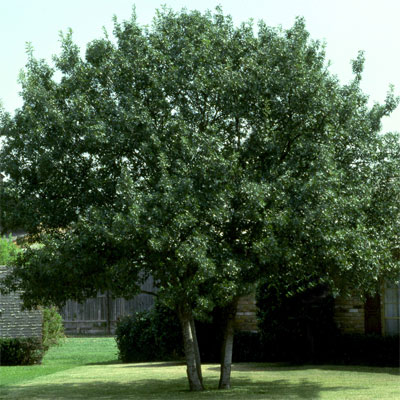
The sawtooth oak is a great shade tree for any property because it adapts to a wide range of soil and climate conditions. It has a spreading canopy of leaves that provide ample shade and beauty, opening a beautiful yellow color in the spring and turning green in the summer before transitioning to golden brown in the fall. The sawtooth oak reaches a height of 40 to 60 feet tall when mature with a spread of 40 to 60 feet. This tree has the added bonus of producing acorns which will attract a variety of wildlife to your property.

hornbeamHornbeam

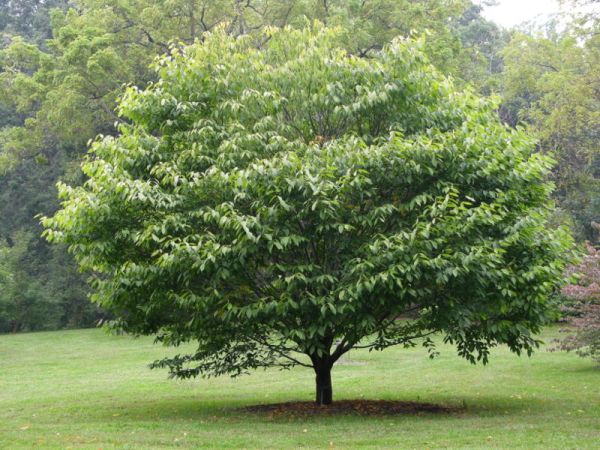
This tree is a more compact shade tree that is perfect for smaller properties. When it reaches maturity it stands 20-40 feet tall with a 20-30-foot spread. The hornbeam will put on a show in the fall as its leaves turn yellow, orange and crimson.

ZelkovaZelkova

The zelkova is a great shade tree for properties located in urban areas because it is tolerant to drought and air pollution. It is known for its beautiful shape, attractive bark and resistance to Dutch elm disease, making it the perfect low-maintenance eye-catching addition to any property. The zelkova grows to be 50-80 feet tall. It also has a similar spread if planted in full sun.

tulip treeTulip Tree

A beautiful shade tree is the tulip tree. It produces tulip-shaped flowers 1-2 inches in diameter that bloom in May and Junealong with a spreading canopy of leaves that block sunlight. This tree has a mature height of 60-90 feet and a spread of 30-50 feet. Contact the experts at Terracare Associates to learn more about which trees are best for your commercial property.


Planting the right tree in the right place is a decision you should discuss with your landscape provider.  Some of the above suggestions of trees grow better in certain geographic areas, while others need proper positioning on the property to ensure strong growth.  Contact Terracare Associates landscape management team for advice on best shade trees for your commercial property.


Employee Spotlight: Gabino DeLaCruz

GabinoGabino DeLaCruz has been a dedicated part of the Terracare Associates team at the Milpitas branch in California since 2012. He works as a crew leader overseeing maintenance work for the City of Livermore. His main responsibilities include directing his crew, training new workers on the City of Livermore contract, and knowing all work sites and maintenance requirements for the City of Livermore. Above all, Gabino values the safety of his crew and the citizens of Livermore. He always thoroughly inspects sites before beginning work and makes sure to implement proper traffic control to ensure the safety of his crew and those who pass by.

“Gabino knows all of the work limits and requirements for the City of Livermore and always follows them. I can count on him to get the job done well and to keep his crew safe no matter how difficult the conditions,” said Sam Galvez, Operations Supervisor for the City of Livermore.

The City of Livermore has field inspectors who monitor maintenance activities of the crew performing work. Gabino works closely with the inspectors and when their priorities change he makes adjustments to maintenance services being performed to meet the inspector’s needs. He takes pride in maintaining a beautiful landscape that the citizens of Livermore can enjoy. Thank you for all of your hard word Gabino!

Reasons To Consider Turf Reduction For Your Commercial Property

Sustainable landscapingDid you know that landscape watering accounts for nearly 50% of your water bill?

Property managers are constantly looking for ways to reduce water costs without compromising the appearance of their landscapes. What can you do to maintain the beauty of the landscaping on your commercial property while also using less water in your landscape? One of the best ways to accomplish this is with a turf reduction conversion.

What is turf reduction?

Turf reduction or landscape conversion involves replacing selected sections of turf grass with drought resistant, native plants or other landscape materials. Turf reduction conversion doesn’t mean covering your property in pea gravel or monkey grass. With the vast selection of beautiful native plants with low water needs, creative design and use of alternative landscaping materials, you will not miss the turf areas.

Hens and ChicksNative plants and xeriscaping

Based on the climate and layout of your property, you can use a variety of low-growing ground covers such as Asiatic Jasmine and Lamb’s Ear that can take the heat and have low water requirements. Water-wise perennials and ornamental grasses will also add color and texture to the landscape design.

bushes

Landscape alternatives

Crushed granite, mulch and river rocks are a few landscape alternatives to replace irrigated turf grass in

areas that are long and narrow or small and odd-shaped.

Why you should consider turf reduction conversion

  1. It uses less landscape water and reduces watering costs

Everyone loves the look of a beautifully manicured, lush, green turf area on their property. Because of the rising cost of landscape watering, many municipalities offer a rebate for reducing the turf areas on residential and commercial properties.

  1. Is turf grass the best choice for certain areas?

The best use of turf grass is on areas where people will be sitting or playing. Ask yourself: is it necessary to have turf grass in parking strips/islands or on south-facing slopes? Why pay to water turf in these hard-to-maintain areas, when that water can be used for the most valuable things in your landscape: trees.

  1. Sustainability and being green

Today, being water-wise and sustainable are not just buzzwords. Irrigation modifications, using native plants and xeriscaping design are not only good for business, but good for the environment as well.

Is turf reduction right for your commercial property? Contact Terracare Associates.

Employee Spotlight: Jose Quinterro

Cypress grove

Jose Quinterro has been working at the Sacramento branch of Terracare Associates since 2004. He followed in the footsteps of his brother Francisco, who is now an account manager for the City of Brentwood. Jose has worked his way through the ranks at TCA. He started as a maintenance worker before receiving his irrigation license and moving on to tech work, which he has continued to do for the past six years. Jose takes pride in what he does and works very well with his fellow employees and management.

“When Jose is asked to do extra work on top of his already busy schedule, he gets it done with no complaints. His customers value his hard work because their job sites are always well-maintained and properly irrigated,” said Steve Thinger, Account Manager at the Sacramento branch.

Jose is happy when he sees healthy sod, beautiful color beds and green shrubs. He loves learning as much as possible about the industry and is always looking for a way to improve and learn new skills. Jose is a valuable asset to TCA and we are grateful for his hard work keeping things green in the Sacramento area.

What is Integrated Pest Management?

What is Integrated Pest Management?

According to the Environmental Protection Agency “Integrated Pest Management (IPM) is an effective and environmentally sensitive approach to pest management that relies on a combination of common-sense practices. IPM programs use current, comprehensive information on the life cycles of pests and their interaction with the environment. This information, in combination with available pest control methods, is used to manage pest damage by the most economical means, and with the least possible hazard to people, property and the environment.

Implementation of IPM

The goal of IPM is to eliminate pest problems by strengthening and stabilizing the landscape and creating the proper balance of conditions that are more favorable for plants than for pests. At Terracare Associates, we often recommend this program to our commercial properties, HOAs and public parks, especially those who are interested in a well-balanced approach to pest management.

Integrated Pest Management is a 4-step process.

  1. Set action thresholdsladybug

The sighting of a few insects does not necessarily pose a threat to the plants on your property. Keep in mind, not all insects require control. Many are not harmful, in fact, some are even beneficial. For instance, lady bugs eat aphids and certain wasp species that feed on web worms.

  1. Regular monitoring

A trained landscape professional should regularly monitor your property for signs of harmful pest infestation. While insects are a common problem, they are not the only problem that should be monitored. Your landscape expert can watch for early signs of disease and weeds in turf areas and floral beds.

  1. Preventionlawn mower

Implementing proper maintenance and lawn care prevention techniques will go a long way in preventing many pests.

We recommend mowing turf areas at the highest setting for your grass type to promote deeper roots and prevent water loss. Taller grass also cools the soil and reduces heat stress.

It is recommended to water turf areas to deeply penetrate the soil twice a week. This will ensure that the grass receives enough water to stay healthy. Frequent watering encourages shallow and weak root systems.

Performing a soil test to determine its pH levels will help prevent you from overusing fertilizer. Improper use of fertilizer promotes weed growth and makes plants more susceptible to disease.

  1. Controlbark

Various methods are used to control pest problems. Cultural control methods, such as mulching beds and other areas, help to control weeds. Mechanical control employs the use of devices, such as traps, for rodents and insects.

Integrated Pest Management emphasizes nonchemical and biological methods of pest control. However, chemical control is used to ensure healthy plant growth and stability.

How Does IPM Benefit Your Property

  • On large commercial properties, hand-pulling weeds is neither practical nor cost efficient.
  • By monitoring, preventing and controlling damaging pests you can reduce failing vegetation, help the environment and save money on replacement plants.
  • IPM gives you a plan to control pest activity on your property, keeping your property looking great for years to come.

Contact Terracare Associates for more information about IPM.


How to Improve Your Property’s Irrigation System on any Budget

Today, commercial property managers aim to have sustainable landscapes that enhance the look of their property without overusing precious resources, such as water.. Time and budget constraints can often limit plans to completely overhaul your landscape irrigation system. However, you might be able to make some of the needed improvements in incremental steps.

Implementing just a few of these suggestions each year can make a significant impact on your irrigation system, watering costs and your landscape’s appearance. Our staff at Terracare recommends the following solutions and best practices:

Step 1 – Simple and low cost solutions

  • Use mowers with mulching blades on turf areas– do not bag grass clippings or leaves.Coneflower
  • Implement an integrated pest management program
  • Mulch beds with 2-3 inches of organic material to prevent weeds and hold moisture near the root zone of the plants.
  • Use water-wise perennial and native plants
  • Perform turf aeration – pull plugs out of the soil throughout the turf to get more oxygen and water to the root system.
  • Install rain and freeze sensors on your irrigation system to avoid unwanted or unsafe watering.
  • Perform regular irrigation system check-ups, looking broken sprinkler heads, clogged lines and other problem areas.

Step 2 –Moderate cost solutions

  • Sub-metering your irrigation system will allow you to better track water usage and remove water waste costs from your irrigation bill.
  • Shred and reuse all organic materials and landscape trimmings as mulch or compost.
  • Conduct an irrigation audit to determine your water usage.
  • Replace rotor spray nozzles with stream spray nozzles to reduce water runoff.


Step 3 – High impact solutions

Some solutions cost more, however, the long-term gains in efficiencies, water conservation and significant reductions in water costs is well worth the investment.

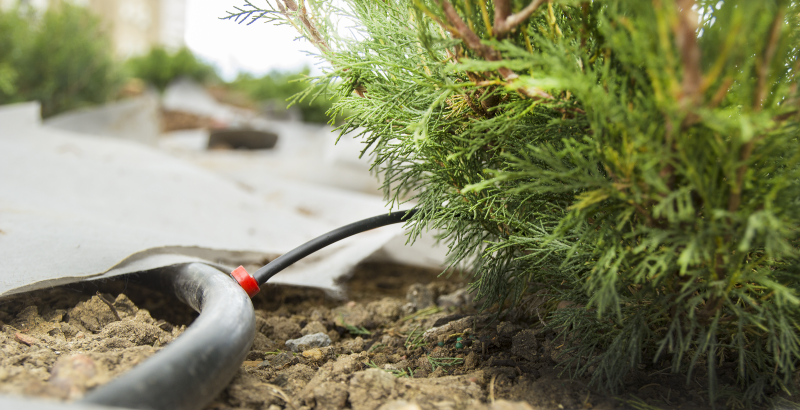
  • Install a drip irrigation system throughout the property Drip system
  • Consider an irrigation supply system that uses captured rainwater, gray water or onsite treated waste water.
  • Install an ET controller, equipped with weather station monitoring – this better controls when and how much the irrigation system operates.

These are just a few suggestions that you can implement to improve your irrigation system.

For more information about ways you can make improvements on your landscape irrigation system, contact Terracare Associates by visiting our website.

Terracare Associates’ irrigation experts are state-licensed technicians, trained to provide watering programs based on the varying needs of plants and planting environments. We design irrigation programs that are tailored to the client’s water use budget, while protecting their landscape investments.

Free Irrigation Audit

  • This field is for validation purposes and should be left unchanged.