Evaluate and Prioritize your Landscape Projects

Part 2

During the month of August, we will provide you a 5 part series on how to easily create your 2018 budget, with the help of your commercial landscape company. Below are the links to the other blog posts in this series:

Where to Start

Now that you have considered the SWOT (Strengths, Weaknesses, Opportunities and Threats) of your property, this is a great time to decide where your projects fit into your budget. In addition, phasing and scheduling out when each project will occur will help ease and relax your budgeting season.  Most importantly, you have a plan for all of your property’s landscape needs.

Determining Your Costs

As a property manager or owner, you almost certainly are assessing costs, but how do you identify projects, prioritize and offer continual improvements to the surrounding landscape?  To simplify, let’s break it down into two distinct budgets.
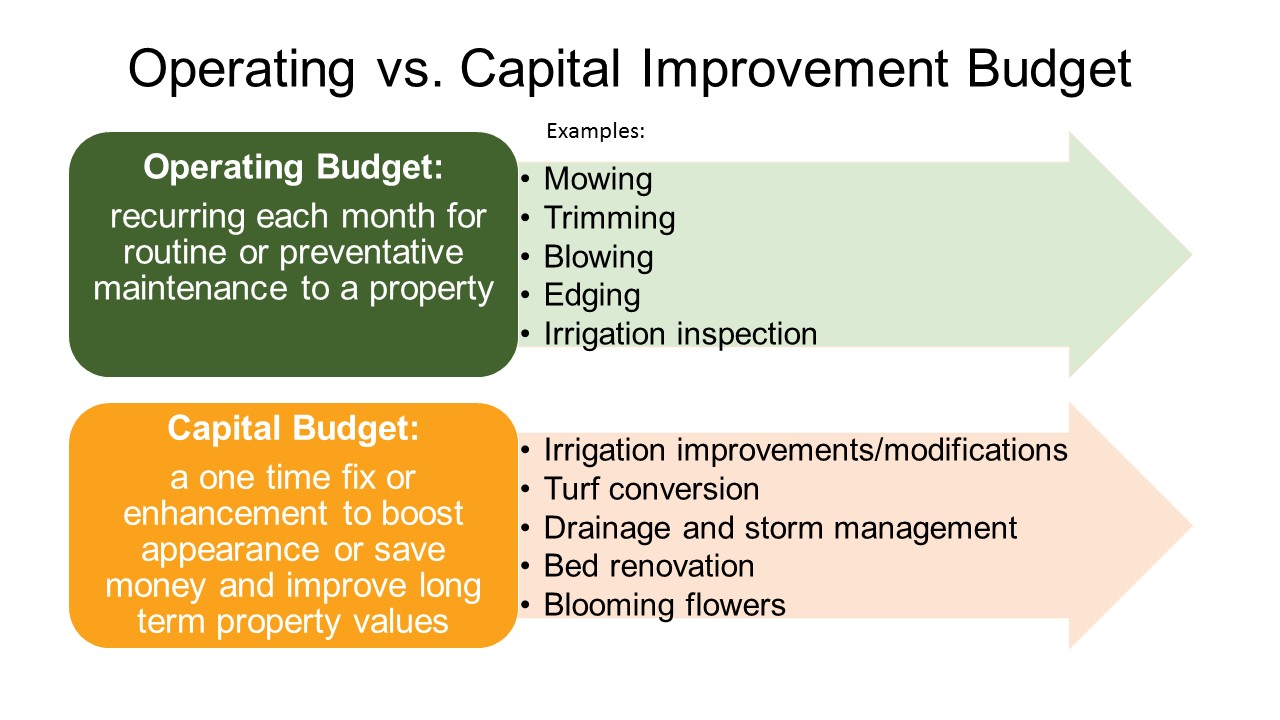
Chart

Why is this important?  Because some property managers and owners may think adding one installation or simply performing monthly maintenance is enough.  In reality, it is a combination of regular maintenance and planned upgrades that keep your property in pristine condition.  It’s not in the best interest for your property to just submit the same budget as last year.  In the end, carefully reviewing the operating and capital budget with your landscape service company will minimize urgent repairs, protect precious resources and be cost effective.

3-Year Plan

Think long term. We recognize budgets are limited and most properties have multiple goals for improvements.  It can be over-whelming and sometimes seem impossible to get all of the projects complete in one year.  Here is where you can get the advice from your commercial landscape maintenance provider on phasing and scheduling out projects:
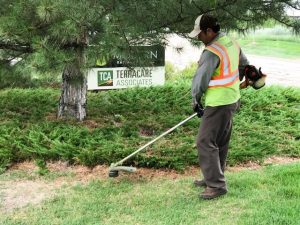
 

  • TrimmingThis year – what are some quick fixes you have money to support this year? Is it mulch to spruce up an entrance, fall flowers to plant in planters or additional lawn care for healthy turf.  Consider starting some improvement projects now.
  • The first year is geared toward general maintenance improvements. Improvements may include additional lawn care treatments, plant health care needs, comprehensive pruning and trimming beyond monthly maintenance requirements. This year may be a good time to begin large multi-year projects with phases.
  • The second year is focused on enhancements and major repairs or upgrades.  This may include, irrigation repairs, plant and tree replacement, and drainage upgrades.
  • The third year is focused on multi- year project completions and may include, water conservation strategies or drought tolerant plantings.

Whether you are clear about the commercial property landscape goals or you need help to define a plan, take a moment, and schedule a consultation with your Account Manager at Terracare.  It’s worth the time!
 

Need more budget help?.

Four Smart Tips to Start a Commercial Landscape Budget – It’s SWOT

Part 1

Studies show a beautiful commercial landscape can raise your property value and attractiveness by as much as 20%.  Simply, through careful planning, a well-maintained property can transform into a place people will enjoy year round. This all starts with a budget.

During the month of August, we will provide you a 5 part series on how to easily create your 2018 budget, with the help of your commercial landscape company. Below are the links to the other blog posts in this series:
Commercial Landscape Budget

It’s SWOT

Start with a walk through with your landscape provider. This opens the discussion on four key areas:

  • Strengths
  • Weaknesses
  • Opportunities
  • Threats or challenges


A SWOT analysis breaks down the property’s features into good or challenging areas and evaluates the property as a whole. Even better, it builds a dialog between you, the property manager, and your landscape account manager on expectations and priorities. Discuss with your Terracare representative the following as you walk the property.


Strengths

Weaknesses

• What do you like about the property?

• Are the property entrances a focal point and well kept?

• Are there shade trees throughout the property?

• Do you have enough color?

• Do you have irrigation issues?

• Are there quick fixes like mulch you can take care of today to improve quickly?

• Are there any menacing pests that will harm trees or plants?

• Does your turf need more luster?

Opportunities

Threats or challenges

• Think long term.


• What projects would you like to do, if costs were not part of the equations?

• Consider upgrading your irrigation system to be eco-friendly and conserve water usage significantly.

• Plant replacement or converting turf area to more sustainable plants.

• Ask your landscape provider how to help build a 3-year landscape plan and start in stages.

• What limitations do you have on the property?


• Will there be more growth?

• Will foot or car traffic increase in the future?

• Look at areas that are more vulnerable, and if left untreated this might have a costly outcome.

•Do you have defined outdoor areas for future visitors or workforce?


What’s next? –  start now, schedule your property walk through with a SWOT in your hand and simplify the decision with this assessment tool.  It’s a smart way to begin your budget process.  See part 2 next week on how to prioritize your landscape projects.


Schedule an Appointment.

Tips for Water Wise Landscaping

After an unusually warm and dry winter in many parts of the country, it’s more important than ever to conserve water as summer approaches. What can you do to save your lawn and save money on your monthly water bill? Here are a few easy tips to help you be more water wise with your landscaping.

Drip systemPrevent water evaporation: Water your lawn early in the morning or in the evening, especially during the hot summer months. Never water on windy days. Use drip irrigation systems for bedded plants, trees, or shrubs and use low-angle sprinklers for lawns. Also, be sure to cover pools and spas to prevent loss of water through evaporation.

One inch of water is enough: Just one inch of water each week will keep most grasses healthy. To determine how long you should run your sprinklers — place straight-edged cans at various distances away from each sprinkler and time how long it takes to fill an average of 1 inch of water in each can.

MulchMulch… Mulch… Mulch!: Cover all flower beds and planted areas with mulch. It keeps the soil moist and slows down the evaporation of water from the soil, allowing water to infiltrate it efficiently. Maintain at least a 2 to 4 inch layer of mulch in all planted beds and containers.

Maintain your sprinkler system: Repair any broken, missing or misdirected sprinkler heads. You should also install rain and freeze sensors on your sprinkler system and monitor your total water usage.

Terracare Associates can help with any of your landscaping needs from installing a more efficient irrigation system to laying down mulch in your plant beds. Visit our website to see what we can do for you.

Free Irrigation Audit

  • This field is for validation purposes and should be left unchanged.

The Five Best Perennials to Xeriscape a Walkway

A perennial is a plant that persists for many growing seasons, unlike an annual which only lasts one growing season (for more information, check out our blog post on the difference between annuals and perennials). There is such a wide variety of perennial plants that it’s easy to incorporate them into any type of landscape, including a xeriscape. Xeriscaping is the practice of conserving water through landscaping. This trend is growing in popularity not only because it’s good for the environment, it also saves property owners money on water costs and requires less time needed for replanting. Paths and walkways are great places to plant drought-resistant perennials to ensure that everyone who visits your property enjoys beautiful landscaping especially as they enter buildings or along parking areas. Here are five of the best perennials to create a beautiful xeriscaped walkway.

Lavender Hidcote Lavender

Lavender Hidcote is a tall, purple flower known for its wonderful fragrance and its tendency to attract butterflies. It prefers hot, sunny and dry air and well-drained soil, making it the perfect choice for western climates. Lavender Hidcote does not require regular watering and will thrive on just 9-12 inches of rain per year. You can expect to see this plant bloom in mid to late summer.


YarrowYarrow

Yarrow consists of flower heads full of small, tightly packed flowers and aromatic leaves. This plant blooms from mid-summer to fall and typically grows to be two to four feet tall. It grows best when planted in well-drained soil with full sun. Yarrow is known for being durable and tolerating dry spell, so it is a perfect low-maintenance yet beautiful addition to any walkway.


EchinaceaConeflower

Echinacea, better known as coneflowers, are colorful daisy-like flowers that bloom from mid-summer to early fall and can grow up to five feet tall. They thrive in areas with full sun and poor soil. These plants are drought resistant and do not require fertilization. You will see beautiful flowers return year after year with very little work if you choose this plant for your property.


Hens and Chicks Hens and Chicks

Hens and Chicks are succulent plants that get their name from their rosette shape and their ability to produce multiple offspring. They come in a range of colors from green to beautiful pinks and reds. Hens and Chicks are best grown in poor soil with full sun and require very little water. Since these plants thrive in rocky soils, they are perfect for planting in the cracks of stone walkways. Just be sure you stepping stones are raised as these plants will not tolerate much foot traffic.


Lady’s MantleLady's mantle

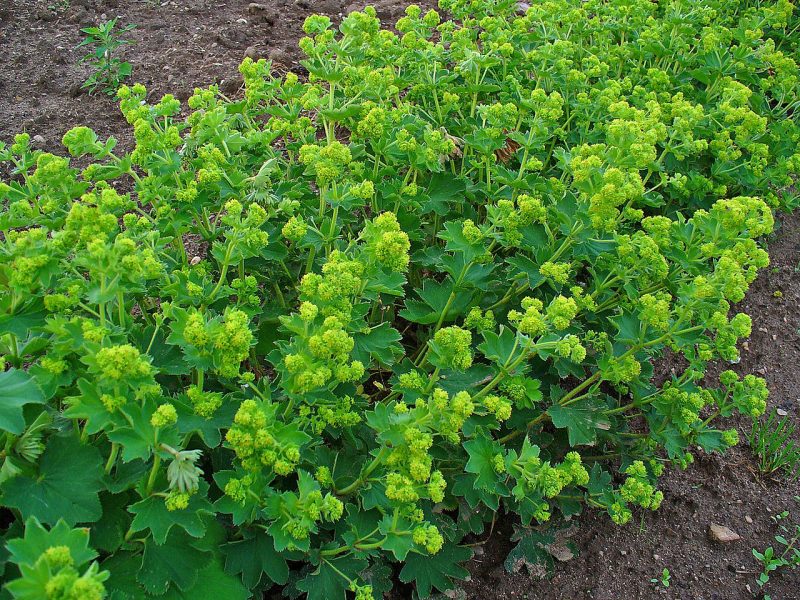
Lady’s Mantle is a clumping perennial that forms green foliage made up of soft, scallop-shaped leaves and yellow-green flowers which bloom in late spring to early summer. It makes for the perfect ground cover to define the boundaries of a walkway or outdoor path. Lady’s Mantle can tolerate full shade or full sun. It does not need to be watered often unless it is planted in full sun or during high temperatures, making it a relatively low-maintenance option.

Tips for Driving Safely with Snowplows

Winter is just around the corner. Municipalities, cities, DOTs, and others are gearing up for the winter by preparing their snowplow crews and equipment. We can all learn valuable lessons from these agencies by preparing our vehicles and ourselves for the upcoming season.


Snowplows serve to make the community and roads passable during the worst winter weather. Snowplows are fitted with heavy, wide plows on the front of the truck to clear as much snow and ice from the road as possible – this means sometimes they may cross the centerline, shoulder of the road or make other moves in their effort to provide a driving surface the general public can navigate. If you encounter a plow, slow down and give them the space they need to perform their task. Your best chance to arrive at your destination safely is to stay behind the plow as the worst of the conditions are in front of the plow. It’s important that everyone, from individual drivers to plow operators, stay safe on the road to get home safely so here are some tips.


Prepare your vehicle

It is good practice to maintain your vehicle year round, however it is especially important to winterize your vehicle to avoid the dangers of frigid winter weather.

Check the following before snow begins to fall:


  • Wiper blades and windshield washer fluid
  • Battery
  • Ignition system
  • Brakes
  • Electrical system
  • Tires
  • Antifreeze
  • Heater and defrost system


Additionally it’s recommended to carry blankets, booster cable, a flashlight and extra batteries, snow scraper and shovel.


When driving:

  • Give snowplows room to do their job. It’s best practice to not tailgate or try to pass a snowplow while it’s in working.
  • As a general rule, stay at least 200 feet behind a snowplow.
  • Plows pushing snow can create a cloud which can blind drivers who are following too closely.
  • These are large, heavy vehicles and the drivers are intent on their task at hand, don’t be another distraction to the plow driver. They cannot stop in a short distance.
  • There may be spreaders on trucks to distribute salt or sand on the road, these can cause damage to cars if driving too close, stay back to protect your car and you.
  • Always turn on your headlights, and have plenty of fuel and wiper fluid (carrying an extra gallon is a good idea) and have appropriate tires for winter driving conditions.
  • Don’t over estimate your braking capabilities, many 4 X 4 vehicles are heavier than normal, thus the braking distance is greater. Your traction is determined by weight and tire tread. Sand or cat litter in your trunk will add weight and can be used if you do need help with traction.
  • Leave extra space between you and the vehicles in front and behind you.
  • Bridge decks freeze first so take extra caution when driving on these.
  • Remember to always buckle up!
  • Ignore the phone and email until you get to your destination. There are other people on the road that deserve your attention.
  • Most importantly, SLOW DOWN!


It is not too late to get help with your snow removal needs. Send us a note or give us a call, we’ll get back to you with a proposal and estimate for how we can help you.

The Autumn Landscape Checklist

Just in time for winter, autumn is an ideal time to prepare your landscape

Autumn months are optimal times for improving, preparing and caring for your landscape and property. Every region of the country experiences different winter weather so while property managers need to prepare accordingly to their region, there are a few tasks that are applicable to every landscape.

Mark Slicker, Business Development Manager in Dallas / Fort Worth, shared a few of these general tips for property managers:
  • Change out any summer seasonal color for winter seasonal color. Install a variety of flowers which will handle the winter months such as Pansy, Viola, Dianthus, Cabbage, Kale and Dusty Miller.
  • Prune. This is the time to prune trees and shrubs to minimize any possible damage which might occur during ice and snow storms. We recommend pruning magnolias, live oaks and wax myrtles.
  • Reshape trees. Conduct major re-shaping of shade trees (oaks, aspens, poplars, elms and birches) as needed after the first freeze when plants go dormant. This is a good time to remove dead or excess plant materials that stands out on bare limbs.
  • Install new plant material. Plant roots grow anytime the soil temperature are 40 degrees or higher – this is typical during the fall. Cooler temperatures and more moisture means newly sowed plants can focus on establishing heartier root systems.  If a root system is established in the fall, then when spring arrives, this expanded root system can support and take advantage of the full surge of spring growth. It also means it is more likely to survive during the summer heat.
  • Divide and replant perennials. The great part about perennials is once the plant is established and healthy, these plants can easily be divided and replanted in other areas of the property. Now is a good time to do this task. Perennial flowers such as iris, day lily, coneflower, coreopsis, and lavender are great examples.
  • Control weeds. Weeds are just like other plants in your landscape. They are saving the last bits of sunlight, water and nutrients to survive through the winter. Now is the time to apply weed killing compounds as the plant will take this with everything else it’s gathering to survive and transports it directly to the growing point of the plant.
  • Aerate. No matter the style of aeration, the fall is the best time to aerate the green spaces and grassy areas on your property. Aeration opens the soil and promotes a better environment for grass roots


Need help cleaning and preparing your property this fall? Contact us for a free assessment on how and where to best work with you to exceed your property’s needs.


3 Reasons to Install Hardscape Enhancements This Year

There are a variety of enhancements property managers, municipalities, and cities can invest in to improve the look, feel and safety of their landscape and property.  Implementing a few easy hardscape enhancement can result in  benefits to tenants, neighborhoods or citizens.   The right blend of landscape and hardscape enhancements can drive visitors to your property through style and attention to detail. We recently highlighted three simple enhancements worth investing in.

Hardscapes can level and shape the look of your commercial property. Hardscapes refer to hard landscape materials which are incorporated into a landscape. Hardscapes include paved areas, retaining walls, amphitheaters, sleeper walls, walkways, picnic or bench areas, and any other landscaping composed of materials such as wood, stone, concrete, etc. which are included in a landscape.

Blue Cross Blue Shield Terrace

Hardscapes have several benefits:

  • Create new spaces. build areas for people to gather. Think patios, walkways and other similar hardscapes provide places for groups to meet, eat lunch, and relax. The right installation is welcoming, safe, integrated into the space properly, and increases overall satisfaction for visitors to the property.
  • Focus on low maintenance. Hardscapes, such as patios and retaining walls, require little maintenance (think time and money) as they help reduce landscaping needs and costs while providing additional ways people can enjoy the space.
  • Sustainability rules. Consider adding a large rock slab walkway (i.e. flagstone) or permeable pavers to allow water to run off into the surrounding ground. These two options are more environmentally-friendly as they are designed to let rain and other precipitation penetrate the ground directly to nourish plants and replenish groundwater supplies.

Screen Shot 2016-08-09 at 5.17.11 PM

Ready to take your commercial property to the next level? Contact us for a free assessment on how and where to best implement these enhancements into your property.

Working Together to Keep our Roads Safe


Safety on the roads starts with you. Road maintenance companies go to great lengths to make sure the road is safe for you during construction. Car and truck construction crashes are often times caused by auto drivers not paying attention or are too impatient to slow down. Sharing the road with large vehicles can be dangerous if you are not aware of their limitations. Many trucks are GPS tracked requiring truck and plow drivers to stay within in the speed limit, and possibly slower during inclement weather. As a company, Terracare Associates spends a lot of time and resources educating employees on how to work safer to prevent on the job accidents and to keep the public safe. Every new team member is given full safety training so they are up to “speed” on keeping safe on the roads (no pun intended).


Keeping employees and the public safe on roadways can be challenging because the worksite includes drivers that don’t see the inherent risks. Here are a few guidelines for you to follow when driving around work zones or near trucks on the road:

  1. Mind the Gap – How close should you follow behind that truck? Some signs advise to stay back 200 feet to prevent damage. If you ride too close, the driver can’t see you in rearview mirrors and hence doesn’t know you are there. A good rule to follow is keep one dashed lane marker between you and the truck for every 10 mph you are driving. This distance will allow the driver to see you and will reduce damage to your vehicle by road debris. Don’t pass trucks during inclement weather, patience pays off and reduces accidents. This is especially important when following a snow plow.
  2. Mirror, Mirror – If you can’t see a drivers mirrors, he likely can’t see you. Always position your vehicle so you can see one or both side mirrors and avoid blind spots when possible.
  3. Mobile Disasters – Trucks entering and exiting works zones can create unexpected changes in traffic patterns. Taking your eyes off the road for a few seconds to check your phone can spell disaster. Put the phone away or pullover to take care of business when it can’t wait.
  4. Marked for Success – Work zones are marked to protect you and the road construction project. When you cross a work zone you put your passengers and the workers in danger and a position where damage could happen to your vehicle. Fresh tar, asphalt or paint can damage your paint job or cause your tires to wear prematurely. Pay attention to signs and seek alternate routes when possible.


Safety is most readily achieved when everyone on the job understands the rules for a safe work zone. Terracare believes safety is for your family. Learn more by watching our safety video or reading about our Safety Rodeo.

How this surprising landscape enhancement can revive your property

You’ve likely seen this enhancement right in front of your eyes, yet perhaps never noticed it. It’s an easy, cost efficient enhancement offering a significant impact on protecting your landscape and water bill. The enhancement is mulch. It is a great addition to help your trees and landscape thrive throughout the year. It especially plays a vital role during the hot summer months and during times of drought. So what is mulch and how can adding it improve your property’s landscape?


What is mulch?

Mulch is any type of material – natural or synthetic – serving as a cover and is spread over the surface of soil. It can take many forms including bark, compost, grass clippings, shredded leaves, and straw. Ideally it is economical, easy to apply and remove, stable, supplies organic matter to the soil, and free of weeds, insects, and diseases.

Mulch

How it can help.

  • Creates insulation. Mulch helps reduce water from evaporating off soil thus reducing the need to water plants frequently. It also helps keep plant roots cooler during the hot months.
  • Suppresses weeds. Mulch is most effective in minimizing the growth of weeds when thoroughly applied to an area. Areas with low or bare spots are prone to weed growth.
  • Improves soil quality. No matter the consistency of the soil you’re dealing with, mulch can help. In sandy soil, it provides nutrients and improves the soil’s ability to hold water. In soil containing clay, it helps break up the clay allowing better air and water movement through the soil.


As Donald A. Rakow noted on Cornell University’s website, “When water droplets land on bare soil, the impact causes soil particles to fly in all directions, resulting in soil crusting and slow water infiltration. Most mulches break the impact of the droplets, reducing soil erosion and crusting and increasing the penetration of water into the soil.”


Where you should use it.

Different types of mulch should be used around different areas on your property. In flower beds, consider using bark mulch to curb weed growth, improve soil quality, and water absorption. Around trees, remove the grass around the trees and replace it with mulch. This minimizes competition from water and nutrients. It again helps keep the roots moist and reduces damage from lawn mowers. Your landscape professional can help identify other areas where mulch can be added to your property.


TCA’s San Francisco Bay Area-based Enhancements Manager, Quinton Guenther sums it up, “Installing bark mulch on your property will instantly add curb appeal making your planter beds look crisp and clean. Additional benefits are water retention, pesticide reduction (less weeds) and help naturally build up the soil quality as the organic material breaks down over time.”


Are you considering adding enhancements to your property this summer or fall? Our experts are happy to meet with you to help with enhancement projects you’re looking to work on. Why not drop us an email so we can help you make your property its best?

3 Landscape Enhancements Worth the Investment

Enhancements to a property are an easy way to add curb appeal and value to your property. So what’s holding you back from investing in enhancements for your property?


Terracare Associates — TCA knows that enhancement projects, which fall outside the ongoing maintenance contract, often fall to the bottom of the to-do list or budget allocation. However whether you’re investing for the first time or reinvesting in upgrading or refurbishing sections of your landscapes, many property managers agree that enhancement projects are worth the time, manpower, and budget allocation.


Before getting started on enhancements projects, work with your landscape provider to evaluate the purpose you want the enhancement to provide. They will help evaluate the main purpose for investing in landscape enhancements on your property include beautifying, safety and damage control, and cost savings. All enhancements should add a clear purpose or interest to your landscape. For instance, when adding sprinklers or irrigation to a property make sure that proper drainage is installed as well. This ensures excess water can properly drain so areas do not flood, become damaging to concrete or unsafe to visitors.


Once you’ve evaluated the purpose for enhancement to your property, here are three quick ideas for enhancements worth investing in right now:

1.Integrated Perennial Plants

Perennial plants return year after year blooming on their own. Perennial flower beds and plants (often referred to in short as “perennials”) help enhance a property in two ways — reducing costs and establishing a property. While the upfront costs for purchasing perennials can be substantial, over the long-term, they reduce costs by enabling properties to purchase and plant flowers once. They also can make a property feel like it’s been there longer. As Terracare Associates Enhancements Manager, Khalana Gocken notes, “Perennials attract investment. They give visitors and passersby the impression the property is established, approachable, and pays attention to detail.” In addition, your landscape provider can recommend annuals flowers to add pop of color to incorporate with perennials creating that “wow” factor for your landscape.

Screen Shot 2016-06-16 at 2.45.45 PM

2. Trees

It’s no secret that trees add value to your property. Trees provide shade and cool the surrounding area, help create a welcoming atmosphere around a property, and provide food and shelter for wildlife. In fact, the U.S. Department of Agriculture believes, “The net cooling effect of a young, healthy tree is equivalent to ten room-size air conditioners operating 20 hours a day.” Trees can save money and protect the visitors from the harsh hot summer sun. However, adding trees shouldn’t be haphazard; every tree is different so think about the ideal placement for the size, shape, and growth habits of each tree. Your landscape provider can work with you to find the perfect trees for your landscape needs.

Screen Shot 2016-06-16 at 2.47.18 PM

3.Drainage

So you’ve invested in trees, bushes, shrubs, and flower beds – a big rain storm hits your property and the surrounding area and now it is flooded. But you haven’t invested in adequate drainage so your plants are drowning in excess water having nowhere to flow. Worst yet, poor drainage can flood area buildings, parking lots, and even surrounding parking areas and roads making it unsafe. Keeping your landscape, plants, and trees properly watered by allowing excess water to drain is extremely important to your property. In severe cases, building detention or retention ponds, serving an important flood control, may be necessary in extreme flood stricken areas. Swales are low track lands, specifically moist or marshy land areas, that can be naturally created or manmade, and are designed to manage water runoff, filter pollutants, and guide water run off away from populated areas. All of these drainage enhancements can protect your property investment from rain and snow run off making your landscape areas safe and healthy.

Screen Shot 2016-06-16 at 2.48.41 PM

Looking to add enhancements to your property? Why not drop Terracare Associates a line to learn how our experts would help add value to your property?