Terracare Associates Acquires Landscape Management Services

Terracare Associates, LLC (“TCA”), a leading outdoor maintenance company, is pleased to announce the acquisition of Landscape Management Services (“LMS”), based in San Jose, CA. The transaction closed on April 30, 2016 and is a strategic extension of current TCA operations in Northern CA.


“This transaction is a terrific opportunity for our organization to grow along the peninsula and we couldn’t be more pleased to partner with the strong ownership and management team currently in place at LMS”, said Dean Murphy, President of TCA. “The team at LMS has built a portfolio of quality-minded clients and we will certainly work together with the LMS staff to meet and exceed their expectations going forward.”


George Kaiser, owner and founder of LMS, added “I feel fortunate to have found a partner like TCA who will continue to support the growth of LMS and its employees well into the future. The process was straight forward and I’m pleased to partner with TCA and our shared values for operating with respect, integrity, and with concern for our communities and the environment.”


TCA is based in Littleton, CO and has approximately 850 employees in four states. TCA is a leader in outdoor maintenance, providing services to both commercial and municipal clients, including landscape, asphalt and concrete maintenance, street sweeping, snow removal, lake maintenance and other related outdoor services.


TCA currently operates in multiple CA locations including Sacramento, Martinez, Brentwood, Livermore, Milpitas and San Diego. In addition, the company has operations in Salt Lake City, Dallas/Ft. Worth and Denver. For more information about TCA, please go to www.MyTerracare.com


For further information please contact:

Cristin Tarr, Director Marketing

Terracare Associates

Office: 720-587-2522

Thank you for helping us support Project C.U.R.E. relief efforts!


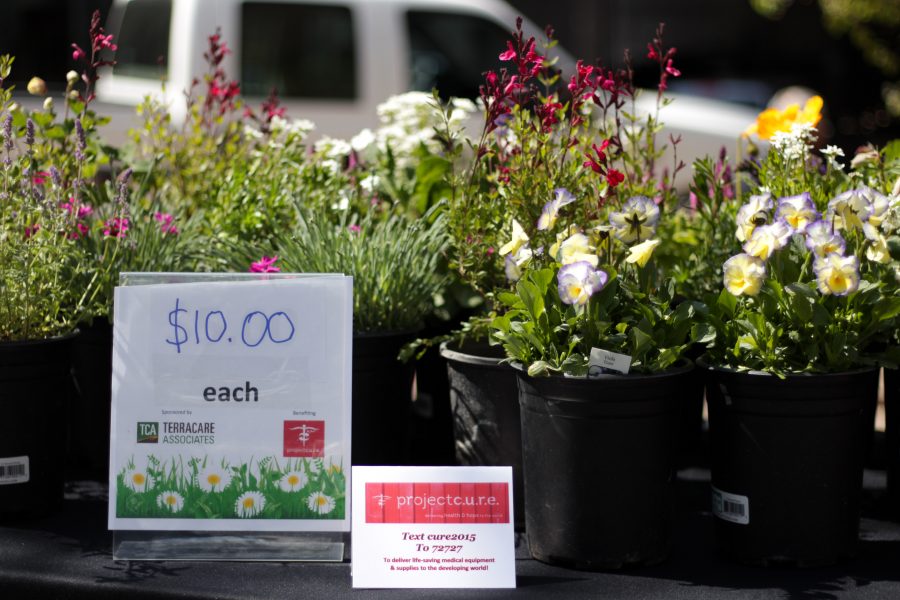
Thank you for your support! Our Project C.U.R.E fundraiser was a success.


We want to sincerely thank all of our generous neighbors, partners, and local businesses who showed up on Earth Day to support our 2nd Annual Earth Day Plant Sale to benefit Project C.U.R.E. in Centennial, Colorado. In partnership with CH2M and City of Centennial, our Project C.U.R.E fundraiser raised almost $2,000 through plant sales to send life-saving and much needed medical supplies to Project C.U.R.E.’s relief assistance efforts in Ecuador. The 7.8 magnitude earthquake hit in mid-April, devastating, injuring and displacing thousands of people, and toppling and destroying homes, businesses, and public infrastructure.


The proceeds from this fundraiser helps enable Project C.U.R.E. to work with strategically selected partners who are on the front lines in the affected areas of Ecuador and are administering care to the several thousands in need.

Terracare at Project C.U.R.E. fundraiser
The team poising for a picture at the Project C.U.R.E. fundraiser. With the help of partners and the community, we raised almost $2,000!

Terracare Associates strives to actively invest in our communities by finding ways to partner with local organizations, and giving back to the communities we live and operate in. We are thankful to find partners in amazing organizations – CH2M and City of Centennial – to help us spread the word and provide a larger positive impact on our communities.


Thank you again to all who stopped by and purchased a plant to benefit Project C.U.R.E. We look forward to seeing you again next year!

Terracare Gives Back During Community Service Month

At Terracare Associates, we are deeply committed to going above and beyond for the communities and cities we support. Throughout the year, we volunteer our expertise, time and skills through giving back to local nonprofits and community events. This month, as we celebrate Community Service Month as well as Earth Day (April 20) and Arbor Day (April 30), we’ll be donating our time, energy, and resources for several events and communities in California, Colorado, and Texas.

volunteering community service

Continue reading “Terracare Gives Back During Community Service Month”

5 Tips for Fighting Weeds

Keep grass healthy and weed-free by mowing regularly.

Spring brings warmer weather, more sunshine, longer days, and the start of the growing season for plants. Unfortunately, plants also include weeds. Weeds tend to be the most resilient and prolific of all plants. Each weed type has its own unique growth and seed cycle that occur at various times during the year. The unpredictability of the weed cycle and vast root system, plus the constant seeding cycle, is why weeds continue to exist. Removing the whole root is the right approach, however close to impossible to achieve without destroying of the root system of the entire area. Any part of a weed root system will eventually lead to the re-establishment of the weed.


Inevitably there is one commercial property, city park, or highway medium that has a perfect lawn – super green and mysteriously, no evidence of weeds. What are they doing, that you aren’t?


Here are five tips for fighting weeds that will deliver healthy and attractive parks and landscapes.

  1. Rake the yard. Once the snow has disappeared from a property, don’t instantly go wild with chemicals. Over the winter, plant matter may have accumulated on top of the grass shading the soil and root structure. Wake up and stimulate growth through light raking.
  2. Stomp out seeds. As temperatures reach 50-65oF apply a pre-emergent type herbicide to combat the seeds (we highly recommend seeking expert landscape advice). This treatment creates a barrier in the soil, when seeds germinate they either grow down or up to the barrier and die off.  Once this has been applied, water to start the treatment but don’t over water and allow the product to work undisturbed.
  3. Fertilizer. Once temperatures are consistently warm, there are a variety of fertilizers that can help. Your outdoor maintenance provider can assist in finding the best mix. In fact, Terracare Associates offers a custom blend that helps with water absorption and fertilization. It is important to have three specific nutrients in the mixture.
    1. Nitrogen (N): Nitrogen will help green the plant
    2. Phosphate (P): Phosphorous helps promote root growth
    3. Potassium (K). Potassium promotes overall plant health (i.e. a good “winterizer” will have a high Potassium number)

    Fertilizing throughout the season improves grass health and stimulates growth so there is no available space for weeds to try to compete.

  4. Mow regularly. Mowing is a key component of the annual process. Each type of grass has an ideal cutting height for health and growth. Mowing at the proper height is an effective weed control practice and will help with the health of your lawn plant. Depending on the weather and time of year, mowing should occur every 4-5 days or every week. Our company often uses mulching mowers; this reduces the amount of matter sent to the landfill and returns the finely clipped grass to the soil as a fertilizer itself.
    • Expert tip: Ask your landscape professional what type of turf is best for your property. You may have a grass that is not ideal material for your landscape.
  5. Spot spraying. Larger properties tend to have sporadic weeds throughout the turf. Terracare’s best practices include spot spray instead of a wholesale treatment. The “down- stream” concerns of run-off can be hazardous to the environment.  Be cognizant of when and how chemicals are washed out into storm drains.


Sticking to these steps will help curb weeds on your property and make it a healthy, beautiful, and sustainable landscape for years to come.


Bill Winfield serves as Director of Operations for Terracare Associates overseeing all public infrastructure operations. Currently, he is the lead project manager on the largest public private partnership contract in the country between City of Centennial, Colorado, and CH2MHill. In addition, he supervises operations of the public works departments for Northwest Parkway and Lone Tree, Colorado, and Cottonwood Heights, Utah, and is responsible for an additional 23 infrastructure contracts and projects. He is a graduate of the University of Wyoming.


5 tips for handling snow-damaged trees

snow-damaged trees
A broken tree branch. Photo courtesy of Hope Carmody & 9News (KUSA-Denver).

Spring snowstorms – like the snowstorm Denver just experienced – often create wet, heavy snow and the snow’s weight can cause considerable damage to a property’s trees and shrubs. Here are 5 tips for handling snow-damaged trees and shrubs:

Assess the area. Before clearing branches, make sure the surrounding area is safe. Broken tree branches often affect and damage utility lines. Be sure to take the proper steps to ensure the situation is safe – this could mean cutting the power to those lines until clean up can be handled.

Check the damage. Trees and shrubs that bend under the weight of the snow will recover. If a tree is overall healthy and possess its main branch, most of its major limbs, and 50 percent or more of its crown (top branches), then the tree has good chances of making a full recovery.

Be patient. There is little during a snowstorm, or in the immediate days following, that you can do to help a tree. Remove any hazards and broken branches, but save major decisions for later. Concentrate on how to save the tree rather than making an impulse decision to chop it down.

Don’t over prune. Remove and prune the damaged parts of the tree. The tree might look uneven for a bit however trees quickly grow new foliage that will soon cover up the bare areas.

Seek help. If the job requires a chainsaw or later or is just too much to handle, contact an insured, certified commercial company that can help assess the situation and with the clean up.

For more information when it comes to assessing and cleaning up damaged trees, visit 9News.com or the Colorado State Forest Service website.

Terracare Associates leaders in outdoor maintenance for commercial and public properties.  Find best practices, tips and industry news at Terracare Talks.

Top 3 Tips for Keeping Landscape Plants Healthy

The spring solstice is just around the corner. So many property managers are gearing up for the arrival of warmer weather, new planting, and new growth.

Follow three easy tips for keeping your landscape investment in beautiful shape for years to come.

1. Provide proper irrigation

Set plants up to grow and bloom during the spring and summer months by taking proper care of them during the winter. This means making sure trees and other plants receive the correct amount of water and fertilizer during this time period.

Depending on location, hydration will be easier as plants receive water from snow melt and rain. For instance, in the milder climates of California, property managers will need to make sure that landscapes are adequately irrigated year-round without relying on heavy snows or rains.

2. Pick the best location for your plants

Make sure the ideal growing climate agrees with where plants, shrubs, or trees will be planted. Will it have room to grow fully or will it need to be continually trimmed to remain the space it’s been planted? Consider how various microclimates will affect the plant’s health.

If the plant requires full sun to grow and flourish, then make sure it is set in a location that provides full sun all day. Furthermore, space plants out in a bed. If plants are crowded together they will compete for light, water, and nutrients and also creates excess humidity allowing diseases to thrive.

3. Maintain it

To allow the plant to grow naturally and fully, make sure that the plant receives adequate water, the appropriate amount and correct type of fertilizer is pruned and monitored for pests. It’s easier to maintain healthy plants by constantly checking them rather than trying to revive stressed and unhealthy ones.

Every property and landscape is different and requires separate maintenance. In addition to sticking to these tips, it’s recommended to partner with landscape professionals to assess the best approach and preservation for your property.

Remember that often the property’s landscape is the first point of contact for visitors, so make the best impression. A clean, beautiful landscape adds curb appeal making it easier to market and adds value to your property.

To learn more about how TCA can work with you to improve your property’s landscape, please contact us.

Quinton Guenther serves as an Enhancement Manager for Terracare Associates in the Greater San Francisco Bay Area. He specializes in offering services outside Terracares base maintenance contract including but not limited to upgrade or enhancement creative ideas and water saving systems. If you are in the San Francisco Bay Area, contact us to find out how TCA can help you improve your plants’ health.

What Property Managers Need to Know About El Niño

El Niño. The most popular two words on the nightly news. The weather reports are inundated by El Niño and its effects on your local weather. But what exactly is El Niño and how does it impact the way you manage your commercial and municipal property?

What is El Nino?

“According to the National Weather Service, “El Niño is a state where the water temperatures in the Pacific Ocean near the equator become abnormally warm. This is a natural cycle that repeats itself on average about once every two to seven years. El Niño tends to begin in the summer and usually peak in intensity during the following winter.”

El Niño disrupts weather patterns on the West Coast causing storm surges, torrential rain storms, and mud slides. California is not alone in the El Niño effect. Property managers throughout the U.S, including the Southwest, and the Rocky Mountain states need to prepare for landscape maintenance issues caused by El Niño.

How Does El Niño Affect Your Property?

After years of heat and drought conditions in California and the Southwest, what should you expect from El Niño? Over the winter months, we are all experiencing increased rain and snowfall and in some cases severe flooding.

Some of the most devastating and damaging effects of the rains and El Niño on landscaping are:

  • Soil erosion from heavy rain and water runoff
  • Damage to parking lots, streets, and roadways
  • Drainage and flooding
  • Tree and plant damage, such as fallen trees due to saturated soil and high winds

Preparing Your Property for El Niño

What can you do to prepare your property?  Here are a few suggestions to help you protect your property from the damaging effects of El Niño.

Evaluate your Property

We often think that El Niño is just a news item that does not impact us locally. However, every property manager should evaluate their landscape and storm water drainage before and after storms. Take a walk through the property to assess the landscape and outdoor maintenance needs. Contact a professional landscape maintenance contractor to assist with this.

Protect Against Soil Erosion

To control soil around plant beds, turf and trees, mulch areas that may be prone to erosion. Here are a few simple landscape modifications that can be made to prevent runoff:

  • Installing netting to help secure slopes
  • Add mulch and mount waddles to differ water runoff.

More extensive erosion control may be needed and this can be evaluated with your landscape maintenance contractor.

Use Sustainable Flowers, Shrubs, and Trees

For commercial property managers, the severe weather conditions will impact your property’s landscaping in some way. To minimize this risk, consider evaluating the variety of plants that are most durable for your region.

I suggest planting drought tolerant ground cover, such as Lantana, Arctostaphylos ‘Emerald Carpet, Myoporum ‘Pacificum’ Cotoneaster. Ground cover plants will  help to stabilize the plant bed and will blanket sloped areas to reduce erosion or water runoff.

Keep a Watchful Eye on  Your Trees

Trees can become stressed during extreme changes in weather. A quick shift from drought conditions to severe rain can be taxing on weak or even healthy trees. Regular pruning and tree maintenance is recommended to reduce end weight on branches that might fall during high winds and storm surges.

Removing weak and broken limbs will help to prevent damage to cars and building structures and reduce susceptibility to tree disease.

Keep Storm Drains Clear

With large volumes of water falling in a short period of time, it is extremely important to clean and clear debris from outdoor drains regularly on the property. At times, install subgrade drains in areas where storm water tends to collect and flood. This will assist in reducing flooding during rain and snow run off.

In landscape areas with continued problems with flooding, the layout and landscape design of your property may be poorly designed to prevent damage and flooding. Retention or detentions ponds may be r in flood zone areas. Consider installing additional drainage, hardscapes, bark and drought tolerant plants to help prevent further damage from the El Niño effects.

Maintain Parking Lots and Walkways

Extreme hot and cold weather, combined with water is a recipe for damaged hardscapes. After a wet and cold winter, parking lots and walkways will show signs of cracks and those unavoidable, potholes. Not repairing the damage can create an eyesore or worse as it is dangerous to pedestrians and drivers.

Volatile weather conditions are predicted to continue. Drought conditions and torrential rains are in the forecast. El Niño weather conditions impact everything outdoors from landscape plants, trees and turf to parking lots, streets, irrigation and stormwater management. Start by evaluating your outdoor maintenance needs to protect your property from the El Niño’s effect.

Want to Know More?

We have published several articles about the impact of weather on

Follow Terracare Associate on Twitter #ElNiñoLandscaping for more information on how El Niño affects your commercial and municipal property.

Next month we will take a look at plant health care.

Quinton Guenther serves as an Enhancement Manager for Terracare Associates in the Greater San Francisco Bay Area. He specializes in offering services outside Terracare’s base maintenance contract including but not limited to upgrade or enhancement creative ideas and water saving systems. If you are in the San Francisco Bay Area, contact us to find out how TCA can help you improve your plants’ health.

Cities and Municipalities Prepare for Winter Storms

Snow plow winter storms

Winter storms can be a challenge for those drivers trying to maneuver the roads.  Municipal public works departments are preparing for the storms 24/7 to ensure public safety.   Continue reading “Cities and Municipalities Prepare for Winter Storms”

Landscape Preservation: What Is Integrated Pest Management?

integrated pest management plants

What is the value of the trees and shrubs on your property? What about the other plants and turf? No doubt there is not much room in your landscaping budget to spend thousands of dollars to replace dead or damaged plants and tree. That is why Terracare Associations has created our Landscape Preservation Program.

What is Landscape Preservation?

Landscape Preservation refers to the landscape care and health of important outdoor assets such as trees, shrubs, and turf on your commercial property.  Replacing high dollar landscape assets can be avoided with ongoing, year-round TLC.  A common way to refer to preserving your landscape assets is,  Integrated Pest Management.  According to the EPA (Environment Protection Agency) “Integrated Pest Management (IPM) is an effective and environmentally sensitive approach to pest management that relies on a combination of common-sense practices.”

Landscape Preservation and plant health care (PHC) use current, comprehensive information on the life cycles of pests and plants to create a fine-tuned program for your property. This program, in combination with available pest control methods, is used to keep your plants and trees healthy as well as manage pest damage with the least possible hazard to people, property, and the environment.

The Three Key Benefits of Landscape Preservation

The goal of Landscape Preservation is to keep your plants and trees healthy. We believe that healthy tree is a happy tree. The same goes for shrubs and other plants.

Healthy plants are better able to fight off insects, disease and other pests. By regularly inspecting plants and trees on your property, we are able to take the needed steps to keep your trees and plants healthy.

Proper feeding and watering throughout the year eliminates many pest problems. By strengthening and stabilizing the landscape, we can create the proper balance of conditions that are more favorable for plants than for pests.

At TCA, we often recommend this program to larger commercial properties, especially those who are concerned with LEED Certification and an eco-friendly approach to pest management.

  • On large, commercial properties, where hand-pulling weeds is neither practical nor cost efficient.
  • By monitoring, preventing and controlling damaging pests you can reduce your use of chemicals that can harm the environment and save money.
  • Landscape Preservation gives you greater knowledge of pest activity on your property.

Creating a Customized Landscape Preservation Program

  1. Inspecting and Monitoring

A trained landscape professional will regularly monitor your property for signs of harmful pest infestation. While insects are a common problem, they are not the only problem that should be monitored. We watch for early signs of plant/tree diseases and weeds in turf areas and floral beds.

The sighting of a few insects does not necessarily pose a threat to the plants on your property. Keep in mind, not all insects require control. Many are not harmful, in fact, some are even beneficial. For instance, lady bugs eat aphids and certain wasp species that feed on web worms. These are just a few of the insects you should welcome.

Each Landscape Preservation Program is customized for a specific property. This is not a one size fits all program. We understand that plant care and pests control varies from region to region.

What is needed in North Texas can be different even in other parts of the state. The same is true in California, Utah, and Colorado, That is why we take a personalized view of each property. To fully understand the needs of your property, we may need to take soil samples or examine the water table.

2. Prevention

Implementing proper maintenance and plant care techniques will go a long way in preventing many of the pests common to your area.

Mowing turf areas at the highest setting for your grass type promotes deeper roots, preventing water loss. Taller grass also cools the soil and reduces heat stress in summer. Proper watering will ensure that the grass stays healthy. Frequent watering encourages shallow and weak root systems.

Performing a soil test to determine its pH levels will help prevent you from overusing fertilizer. Improper use of fertilizer promotes weed growth and makes plants more susceptible to disease.

3. Control

Landscape Preservation emphasizes non-chemical and biological methods of plant health and pest control. However, when chemical control is called for, it is important to choose the least toxic methods.

Various methods are used to control pest problems. Cultural control methods, such as mulching beds and other areas, help to control weeds. Mechanical control employs the use of devices, such as traps for rodents and insects.

Is your property ready for winter? Contact Terracare Associates to find out how you can protect and preservation the beauty and health of the plants on your property.

This is part 3 of a 3 part series on the benefits of winterizing and preserving your landscape:

Part 1: The Importance of Winterizing Your Landscape

Part 2: Why Your Property Need a Winter Watering Program

Part 3: Landscape Preservation: How Integrated Pest Management Can Save You Money

_____________________

Terracare Associates [TCA] is a recognized leader in outdoor maintenance in the Western United States – with 30 years of experience. During all seasons, our certified and experienced staff improves landscapes, parks, roadways and infrastructure for beautiful, safe and sustainable outdoor environments.

For more information about Integrated Pest Management: