
3 Landscape Enhancements Worth the Investment

Enhancements to a property are an easy way to add curb appeal and value to your property. So what’s holding you back from investing in enhancements for your property?


Terracare Associates — TCA knows that enhancement projects, which fall outside the ongoing maintenance contract, often fall to the bottom of the to-do list or budget allocation. However whether you’re investing for the first time or reinvesting in upgrading or refurbishing sections of your landscapes, many property managers agree that enhancement projects are worth the time, manpower, and budget allocation.


Before getting started on enhancements projects, work with your landscape provider to evaluate the purpose you want the enhancement to provide. They will help evaluate the main purpose for investing in landscape enhancements on your property include beautifying, safety and damage control, and cost savings. All enhancements should add a clear purpose or interest to your landscape. For instance, when adding sprinklers or irrigation to a property make sure that proper drainage is installed as well. This ensures excess water can properly drain so areas do not flood, become damaging to concrete or unsafe to visitors.


Once you’ve evaluated the purpose for enhancement to your property, here are three quick ideas for enhancements worth investing in right now:

1.Integrated Perennial Plants

Perennial plants return year after year blooming on their own. Perennial flower beds and plants (often referred to in short as “perennials”) help enhance a property in two ways — reducing costs and establishing a property. While the upfront costs for purchasing perennials can be substantial, over the long-term, they reduce costs by enabling properties to purchase and plant flowers once. They also can make a property feel like it’s been there longer. As Terracare Associates Enhancements Manager, Khalana Gocken notes, “Perennials attract investment. They give visitors and passersby the impression the property is established, approachable, and pays attention to detail.” In addition, your landscape provider can recommend annuals flowers to add pop of color to incorporate with perennials creating that “wow” factor for your landscape.

Screen Shot 2016-06-16 at 2.45.45 PM

2. Trees

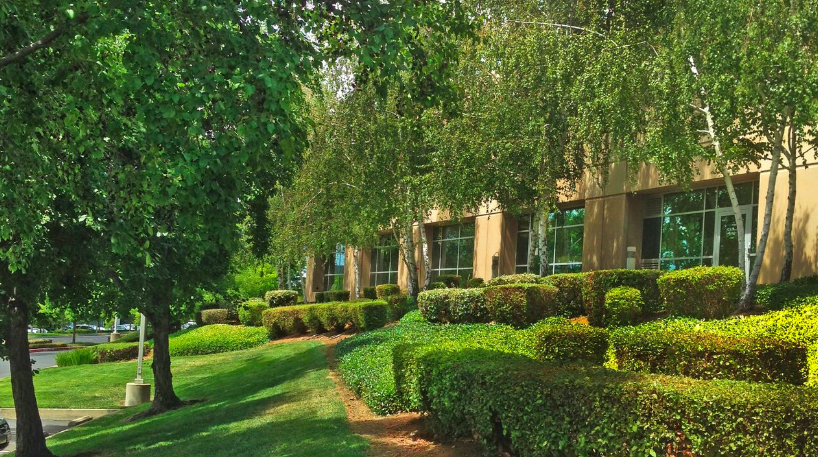
It’s no secret that trees add value to your property. Trees provide shade and cool the surrounding area, help create a welcoming atmosphere around a property, and provide food and shelter for wildlife. In fact, the U.S. Department of Agriculture believes, “The net cooling effect of a young, healthy tree is equivalent to ten room-size air conditioners operating 20 hours a day.” Trees can save money and protect the visitors from the harsh hot summer sun. However, adding trees shouldn’t be haphazard; every tree is different so think about the ideal placement for the size, shape, and growth habits of each tree. Your landscape provider can work with you to find the perfect trees for your landscape needs.
Screen Shot 2016-06-16 at 2.47.18 PM

3.Drainage

So you’ve invested in trees, bushes, shrubs, and flower beds – a big rain storm hits your property and the surrounding area and now it is flooded. But you haven’t invested in adequate drainage so your plants are drowning in excess water having nowhere to flow. Worst yet, poor drainage can flood area buildings, parking lots, and even surrounding parking areas and roads making it unsafe. Keeping your landscape, plants, and trees properly watered by allowing excess water to drain is extremely important to your property. In severe cases, building detention or retention ponds, serving an important flood control, may be necessary in extreme flood stricken areas. Swales are low track lands, specifically moist or marshy land areas, that can be naturally created or manmade, and are designed to manage water runoff, filter pollutants, and guide water run off away from populated areas. All of these drainage enhancements can protect your property investment from rain and snow run off making your landscape areas safe and healthy.

Screen Shot 2016-06-16 at 2.48.41 PM

Looking to add enhancements to your property? Why not drop Terracare Associates a line to learn how our experts would help add value to your property?

3 Reasons Enhancements Improve Your Property

A commercial property, municipal park, or other landscaped areas need ongoing improvements, but it is not always easy to justify the expense. When evaluating your landscape enhancement needs you may be looking at projects such as:

  • Adding a bed of perennial flowers near a parking lot
  • Sprucing up an entrance with trees for shade and protection
  • Installing a state-of-the-art water efficient sprinkler system to save money
  • Creating a patio area for visitors to use and beautify the area


You likely realize enhancement projects add to your property’s curb appeal, but do you know how else they can help your property? Here are a few ways.


Reduce water costs

Think long-term when it comes to your property’s landscape. Enhancements can reduce your water costs and usage. A few examples of enhancements that can help cut water use:

  1. Upgrade to new water-efficient smart controllers for your water system will cut water usage and costs.
  2. Invest in turf conversion in areas that grass is not used for recreation or relaxation.
  3. Install drought-resistant plants and grasses can help reduce water usage and overall maintenance.


Increase desirability of property

Think about the last time you were on a property that was appealing and comfortable. Now think about what landscape features that property exhibited. Was it a nice water feature or vibrant flower bed? Any of these enhancements can often conjure positive feedback and attraction for visitors and employees who are on the property. It increases the property’s desirability and has proven to help raise occupancy rates or visitors, increase overall value of the property, and most importantly, those living or working in the area, have an increased desire to stay.


Protects existing landscape investments

You’ve already invested time, manpower, and money into developing and maintaining your property. Now is a good time to consider protecting these landscape assets with enhancements. Examples of enhancements that will help protect and maintain your landscape:

-Drainage: Ensure plants and trees have adequate drainage and excess water is flowing into the correct areas.

-Mulch: Mulch can reduce evaporation from soil, stabilize soil moisture, and more.

-Arbor services: You’ve invested in trees. Now make certain those trees thrive through pruning and proper fertilization.


Interested in learning more about how enhancements can improve your property? Reach out to Terracare Associates and we’ll happily answer your questions and work with you to identify which enhancements are best for your property.


Terracare Associates named one of the largest landscape companies

Terracare Associates has been named one of the largest landscape companies in North America by Lawn & Landscape magazine. Terracare Associates ranked 29th on the 2016 Lawn & Landscape Top 100 list, which was published in May and sponsored by Toro.

“To be included on the Top 100 list is a high honor. This list is very exclusive – only a small percentage of landscapers can make it – and brings with it a great responsibility,” says Lawn & Landscape Editor and Associate Publisher Chuck Bowen. “Because of their size and stature in the industry, these 100 companies act as ambassadors of the landscape profession to homeowners and commercial property managers across the country. They continue to exhibit all the things that make the landscape industry great: dedication, drive and a desire to make the world a better place.”

“We’ve had an outstanding year and our team is honored to be recognized as one of the Top 100 landscape companies by Lawn & Landscape again this year,” says Dean Murphy, President, Terracare Associates. “It’s been our focus and ongoing commitment for more than 30 years to supply superior quality and reliable outdoor maintenance services. We’re thrilled to be recognized for the growth we’ve achieved during this time and our leadership in the industry.”

The Lawn & Landscape Top 100 is based on 2015 revenue from landscape profit centers, and is reported by each company listed. Companies on the Top 100 list earned total revenue in 2015 of $8,445,782,868. That’s $403,225,109 more than in 2014 – an increase of 5 percent. Companies on the list reported total employment (seasonal plus year-round employees) of 83,971 people. The list comprises 96 companies in 30 states and four firms in Canada.

This year’s list was compiled by Lawn & Landscape editors during the spring of 2015. Email Bowen at cbowen@gie.net with comments or questions about the list.

ABOUT TERRACARE ASSOCIATES

Terracare Associates, LLC is a recognized leader in outdoor maintenance in the Western United States – with 30 years of experience. During all seasons, our certified and experienced staff improves landscapes, parks, roadways and infrastructure for beautiful, safe and sustainable outdoor environments. We are headquartered in Littleton, Colorado, and are proud to serve Metropolitan Denver, the City of Sacramento region and the Northern and Southern California, the Greater Salt Lake City of Utah and the Metroplex Dallas, Texas.

How to Save Water And Money – A Case Study

A Denver-area HOA partnered with Terracare Associates to save water and money for the community. 


Water, our precious commodity. When it rains, we may not think of the need to reduce water usage. Many commercial properties managers and communities in the western United States are engaging in tough conversations around water usage. Years of water restrictions and droughts are becoming more common. Conserving water and creating sustainable and environmentally friendly water features – even during rainier years – is a growing priority.


Commercial site managers, and municipalities and special districts are faced with tough decisions including property or area aesthetics, costs, and technology. It’s important to find the right balance between incorporating sustainable plants while also identifying and determining the most efficient and effective irrigation system technology. The irrigation system has to work effectively and instantly to make sure the landscape remains beautiful and pristine while only using water when needed.

Water cascading into a pond at Arapahoe Lakes

The goal?

Cut water use costs, lower the amount of water used, and create a more sustainable landscape.


The Arapahoe Lakes community and homeowners association (HOA) was faced with this dilemma. Situated in the South Metro Denver area of Colorado, the community encompasses a couple hundred family homes, a lake, a playground and a several miles of greenbelt walkways.


In 2009, the Arapahoe Lakes community and HOA wanted to take a proactive approach to being more responsible stewards of water – the community wanted to reduce water and cut costs. Arapahoe Lakes HOA turned to Terracare Associates – TCA, who had been a trusted and credible partner to Arapahoe Lake’s board members for more than 15 years, to help troubleshoot a solution.


The Solution

The solution included three players – Terracare Associates, Arapahoe Lakes HOA, and Denver Water. As Terracare Associates and Arapahoe Lakes HOA worked to develop an efficient and effective solution, Denver Water was also running a rebate incentive at the same time. Denver Water’s rebate program, the Irrigation Efficiency Agreement, provided payments to customers for water savings achieved as a result of making irrigation efficiency upgrades and/or landscape changes. Terracare Associates and Arapahoe Lakes HOA decided to maximize financial savings through both water usage and the rebate program. Arapahoe Lakes HOA received financial incentives on material costs associated with upgrading the irrigation system to include smart irrigation controllers and commercial irrigation high-efficiency or rotary nozzles.


The Results

Over five years, from 2010 to 2014, the Arapahoe Lakes HOA saved more than 9.3 million gallons in water, at a savings of more than $106,000. That’s huge!


Interested in learning more about how Terracare Associates can help you and your team manage your property? Drop us a note.


5 Tips for Fighting Weeds

Keep grass healthy and weed-free by mowing regularly.

Spring brings warmer weather, more sunshine, longer days, and the start of the growing season for plants. Unfortunately, plants also include weeds. Weeds tend to be the most resilient and prolific of all plants. Each weed type has its own unique growth and seed cycle that occur at various times during the year. The unpredictability of the weed cycle and vast root system, plus the constant seeding cycle, is why weeds continue to exist. Removing the whole root is the right approach, however close to impossible to achieve without destroying of the root system of the entire area. Any part of a weed root system will eventually lead to the re-establishment of the weed.


Inevitably there is one commercial property, city park, or highway medium that has a perfect lawn – super green and mysteriously, no evidence of weeds. What are they doing, that you aren’t?


Here are five tips for fighting weeds that will deliver healthy and attractive parks and landscapes.

  1. Rake the yard. Once the snow has disappeared from a property, don’t instantly go wild with chemicals. Over the winter, plant matter may have accumulated on top of the grass shading the soil and root structure. Wake up and stimulate growth through light raking.
  2. Stomp out seeds. As temperatures reach 50-65oF apply a pre-emergent type herbicide to combat the seeds (we highly recommend seeking expert landscape advice). This treatment creates a barrier in the soil, when seeds germinate they either grow down or up to the barrier and die off.  Once this has been applied, water to start the treatment but don’t over water and allow the product to work undisturbed.
  3. Fertilizer. Once temperatures are consistently warm, there are a variety of fertilizers that can help. Your outdoor maintenance provider can assist in finding the best mix. In fact, Terracare Associates offers a custom blend that helps with water absorption and fertilization. It is important to have three specific nutrients in the mixture.
    1. Nitrogen (N): Nitrogen will help green the plant
    2. Phosphate (P): Phosphorous helps promote root growth
    3. Potassium (K). Potassium promotes overall plant health (i.e. a good “winterizer” will have a high Potassium number)

    Fertilizing throughout the season improves grass health and stimulates growth so there is no available space for weeds to try to compete.

  4. Mow regularly. Mowing is a key component of the annual process. Each type of grass has an ideal cutting height for health and growth. Mowing at the proper height is an effective weed control practice and will help with the health of your lawn plant. Depending on the weather and time of year, mowing should occur every 4-5 days or every week. Our company often uses mulching mowers; this reduces the amount of matter sent to the landfill and returns the finely clipped grass to the soil as a fertilizer itself.
    • Expert tip: Ask your landscape professional what type of turf is best for your property. You may have a grass that is not ideal material for your landscape.
  5. Spot spraying. Larger properties tend to have sporadic weeds throughout the turf. Terracare’s best practices include spot spray instead of a wholesale treatment. The “down- stream” concerns of run-off can be hazardous to the environment.  Be cognizant of when and how chemicals are washed out into storm drains.


Sticking to these steps will help curb weeds on your property and make it a healthy, beautiful, and sustainable landscape for years to come.


Bill Winfield serves as Director of Operations for Terracare Associates overseeing all public infrastructure operations. Currently, he is the lead project manager on the largest public private partnership contract in the country between City of Centennial, Colorado, and CH2MHill. In addition, he supervises operations of the public works departments for Northwest Parkway and Lone Tree, Colorado, and Cottonwood Heights, Utah, and is responsible for an additional 23 infrastructure contracts and projects. He is a graduate of the University of Wyoming.


5 tips for handling snow-damaged trees

snow-damaged trees
A broken tree branch. Photo courtesy of Hope Carmody & 9News (KUSA-Denver).

Spring snowstorms – like the snowstorm Denver just experienced – often create wet, heavy snow and the snow’s weight can cause considerable damage to a property’s trees and shrubs. Here are 5 tips for handling snow-damaged trees and shrubs:

Assess the area. Before clearing branches, make sure the surrounding area is safe. Broken tree branches often affect and damage utility lines. Be sure to take the proper steps to ensure the situation is safe – this could mean cutting the power to those lines until clean up can be handled.

Check the damage. Trees and shrubs that bend under the weight of the snow will recover. If a tree is overall healthy and possess its main branch, most of its major limbs, and 50 percent or more of its crown (top branches), then the tree has good chances of making a full recovery.

Be patient. There is little during a snowstorm, or in the immediate days following, that you can do to help a tree. Remove any hazards and broken branches, but save major decisions for later. Concentrate on how to save the tree rather than making an impulse decision to chop it down.

Don’t over prune. Remove and prune the damaged parts of the tree. The tree might look uneven for a bit however trees quickly grow new foliage that will soon cover up the bare areas.

Seek help. If the job requires a chainsaw or later or is just too much to handle, contact an insured, certified commercial company that can help assess the situation and with the clean up.

For more information when it comes to assessing and cleaning up damaged trees, visit 9News.com or the Colorado State Forest Service website.

Terracare Associates leaders in outdoor maintenance for commercial and public properties.  Find best practices, tips and industry news at Terracare Talks.

Top 3 Tips for Keeping Landscape Plants Healthy

The spring solstice is just around the corner. So many property managers are gearing up for the arrival of warmer weather, new planting, and new growth.

Follow three easy tips for keeping your landscape investment in beautiful shape for years to come.

1. Provide proper irrigation

Set plants up to grow and bloom during the spring and summer months by taking proper care of them during the winter. This means making sure trees and other plants receive the correct amount of water and fertilizer during this time period.

Depending on location, hydration will be easier as plants receive water from snow melt and rain. For instance, in the milder climates of California, property managers will need to make sure that landscapes are adequately irrigated year-round without relying on heavy snows or rains.

2. Pick the best location for your plants

Make sure the ideal growing climate agrees with where plants, shrubs, or trees will be planted. Will it have room to grow fully or will it need to be continually trimmed to remain the space it’s been planted? Consider how various microclimates will affect the plant’s health.

If the plant requires full sun to grow and flourish, then make sure it is set in a location that provides full sun all day. Furthermore, space plants out in a bed. If plants are crowded together they will compete for light, water, and nutrients and also creates excess humidity allowing diseases to thrive.

3. Maintain it

To allow the plant to grow naturally and fully, make sure that the plant receives adequate water, the appropriate amount and correct type of fertilizer is pruned and monitored for pests. It’s easier to maintain healthy plants by constantly checking them rather than trying to revive stressed and unhealthy ones.

Every property and landscape is different and requires separate maintenance. In addition to sticking to these tips, it’s recommended to partner with landscape professionals to assess the best approach and preservation for your property.

Remember that often the property’s landscape is the first point of contact for visitors, so make the best impression. A clean, beautiful landscape adds curb appeal making it easier to market and adds value to your property.

To learn more about how TCA can work with you to improve your property’s landscape, please contact us.

Quinton Guenther serves as an Enhancement Manager for Terracare Associates in the Greater San Francisco Bay Area. He specializes in offering services outside Terracares base maintenance contract including but not limited to upgrade or enhancement creative ideas and water saving systems. If you are in the San Francisco Bay Area, contact us to find out how TCA can help you improve your plants’ health.

What Property Managers Need to Know About El Niño

El Niño. The most popular two words on the nightly news. The weather reports are inundated by El Niño and its effects on your local weather. But what exactly is El Niño and how does it impact the way you manage your commercial and municipal property?

What is El Nino?

“According to the National Weather Service, “El Niño is a state where the water temperatures in the Pacific Ocean near the equator become abnormally warm. This is a natural cycle that repeats itself on average about once every two to seven years. El Niño tends to begin in the summer and usually peak in intensity during the following winter.”

El Niño disrupts weather patterns on the West Coast causing storm surges, torrential rain storms, and mud slides. California is not alone in the El Niño effect. Property managers throughout the U.S, including the Southwest, and the Rocky Mountain states need to prepare for landscape maintenance issues caused by El Niño.

How Does El Niño Affect Your Property?

After years of heat and drought conditions in California and the Southwest, what should you expect from El Niño? Over the winter months, we are all experiencing increased rain and snowfall and in some cases severe flooding.

Some of the most devastating and damaging effects of the rains and El Niño on landscaping are:

  • Soil erosion from heavy rain and water runoff
  • Damage to parking lots, streets, and roadways
  • Drainage and flooding
  • Tree and plant damage, such as fallen trees due to saturated soil and high winds

Preparing Your Property for El Niño

What can you do to prepare your property?  Here are a few suggestions to help you protect your property from the damaging effects of El Niño.

Evaluate your Property

We often think that El Niño is just a news item that does not impact us locally. However, every property manager should evaluate their landscape and storm water drainage before and after storms. Take a walk through the property to assess the landscape and outdoor maintenance needs. Contact a professional landscape maintenance contractor to assist with this.

Protect Against Soil Erosion

To control soil around plant beds, turf and trees, mulch areas that may be prone to erosion. Here are a few simple landscape modifications that can be made to prevent runoff:

  • Installing netting to help secure slopes
  • Add mulch and mount waddles to differ water runoff.

More extensive erosion control may be needed and this can be evaluated with your landscape maintenance contractor.

Use Sustainable Flowers, Shrubs, and Trees

For commercial property managers, the severe weather conditions will impact your property’s landscaping in some way. To minimize this risk, consider evaluating the variety of plants that are most durable for your region.

I suggest planting drought tolerant ground cover, such as Lantana, Arctostaphylos ‘Emerald Carpet, Myoporum ‘Pacificum’ Cotoneaster. Ground cover plants will  help to stabilize the plant bed and will blanket sloped areas to reduce erosion or water runoff.

Keep a Watchful Eye on  Your Trees

Trees can become stressed during extreme changes in weather. A quick shift from drought conditions to severe rain can be taxing on weak or even healthy trees. Regular pruning and tree maintenance is recommended to reduce end weight on branches that might fall during high winds and storm surges.

Removing weak and broken limbs will help to prevent damage to cars and building structures and reduce susceptibility to tree disease.

Keep Storm Drains Clear

With large volumes of water falling in a short period of time, it is extremely important to clean and clear debris from outdoor drains regularly on the property. At times, install subgrade drains in areas where storm water tends to collect and flood. This will assist in reducing flooding during rain and snow run off.

In landscape areas with continued problems with flooding, the layout and landscape design of your property may be poorly designed to prevent damage and flooding. Retention or detentions ponds may be r in flood zone areas. Consider installing additional drainage, hardscapes, bark and drought tolerant plants to help prevent further damage from the El Niño effects.

Maintain Parking Lots and Walkways

Extreme hot and cold weather, combined with water is a recipe for damaged hardscapes. After a wet and cold winter, parking lots and walkways will show signs of cracks and those unavoidable, potholes. Not repairing the damage can create an eyesore or worse as it is dangerous to pedestrians and drivers.

Volatile weather conditions are predicted to continue. Drought conditions and torrential rains are in the forecast. El Niño weather conditions impact everything outdoors from landscape plants, trees and turf to parking lots, streets, irrigation and stormwater management. Start by evaluating your outdoor maintenance needs to protect your property from the El Niño’s effect.

Want to Know More?

We have published several articles about the impact of weather on

Follow Terracare Associate on Twitter #ElNiñoLandscaping for more information on how El Niño affects your commercial and municipal property.

Next month we will take a look at plant health care.

Quinton Guenther serves as an Enhancement Manager for Terracare Associates in the Greater San Francisco Bay Area. He specializes in offering services outside Terracare’s base maintenance contract including but not limited to upgrade or enhancement creative ideas and water saving systems. If you are in the San Francisco Bay Area, contact us to find out how TCA can help you improve your plants’ health.

Landscape Preservation: What Is Integrated Pest Management?

integrated pest management plants

What is the value of the trees and shrubs on your property? What about the other plants and turf? No doubt there is not much room in your landscaping budget to spend thousands of dollars to replace dead or damaged plants and tree. That is why Terracare Associations has created our Landscape Preservation Program.

What is Landscape Preservation?

Landscape Preservation refers to the landscape care and health of important outdoor assets such as trees, shrubs, and turf on your commercial property.  Replacing high dollar landscape assets can be avoided with ongoing, year-round TLC.  A common way to refer to preserving your landscape assets is,  Integrated Pest Management.  According to the EPA (Environment Protection Agency) “Integrated Pest Management (IPM) is an effective and environmentally sensitive approach to pest management that relies on a combination of common-sense practices.”

Landscape Preservation and plant health care (PHC) use current, comprehensive information on the life cycles of pests and plants to create a fine-tuned program for your property. This program, in combination with available pest control methods, is used to keep your plants and trees healthy as well as manage pest damage with the least possible hazard to people, property, and the environment.

The Three Key Benefits of Landscape Preservation

The goal of Landscape Preservation is to keep your plants and trees healthy. We believe that healthy tree is a happy tree. The same goes for shrubs and other plants.

Healthy plants are better able to fight off insects, disease and other pests. By regularly inspecting plants and trees on your property, we are able to take the needed steps to keep your trees and plants healthy.

Proper feeding and watering throughout the year eliminates many pest problems. By strengthening and stabilizing the landscape, we can create the proper balance of conditions that are more favorable for plants than for pests.

At TCA, we often recommend this program to larger commercial properties, especially those who are concerned with LEED Certification and an eco-friendly approach to pest management.

  • On large, commercial properties, where hand-pulling weeds is neither practical nor cost efficient.
  • By monitoring, preventing and controlling damaging pests you can reduce your use of chemicals that can harm the environment and save money.
  • Landscape Preservation gives you greater knowledge of pest activity on your property.

Creating a Customized Landscape Preservation Program

  1. Inspecting and Monitoring

A trained landscape professional will regularly monitor your property for signs of harmful pest infestation. While insects are a common problem, they are not the only problem that should be monitored. We watch for early signs of plant/tree diseases and weeds in turf areas and floral beds.

The sighting of a few insects does not necessarily pose a threat to the plants on your property. Keep in mind, not all insects require control. Many are not harmful, in fact, some are even beneficial. For instance, lady bugs eat aphids and certain wasp species that feed on web worms. These are just a few of the insects you should welcome.

Each Landscape Preservation Program is customized for a specific property. This is not a one size fits all program. We understand that plant care and pests control varies from region to region.

What is needed in North Texas can be different even in other parts of the state. The same is true in California, Utah, and Colorado, That is why we take a personalized view of each property. To fully understand the needs of your property, we may need to take soil samples or examine the water table.

2. Prevention

Implementing proper maintenance and plant care techniques will go a long way in preventing many of the pests common to your area.

Mowing turf areas at the highest setting for your grass type promotes deeper roots, preventing water loss. Taller grass also cools the soil and reduces heat stress in summer. Proper watering will ensure that the grass stays healthy. Frequent watering encourages shallow and weak root systems.

Performing a soil test to determine its pH levels will help prevent you from overusing fertilizer. Improper use of fertilizer promotes weed growth and makes plants more susceptible to disease.

3. Control

Landscape Preservation emphasizes non-chemical and biological methods of plant health and pest control. However, when chemical control is called for, it is important to choose the least toxic methods.

Various methods are used to control pest problems. Cultural control methods, such as mulching beds and other areas, help to control weeds. Mechanical control employs the use of devices, such as traps for rodents and insects.

Is your property ready for winter? Contact Terracare Associates to find out how you can protect and preservation the beauty and health of the plants on your property.

This is part 3 of a 3 part series on the benefits of winterizing and preserving your landscape:

Part 1: The Importance of Winterizing Your Landscape

Part 2: Why Your Property Need a Winter Watering Program

Part 3: Landscape Preservation: How Integrated Pest Management Can Save You Money

_____________________

Terracare Associates [TCA] is a recognized leader in outdoor maintenance in the Western United States – with 30 years of experience. During all seasons, our certified and experienced staff improves landscapes, parks, roadways and infrastructure for beautiful, safe and sustainable outdoor environments.

For more information about Integrated Pest Management: